Stay up to Date with

GRP|WEGMAN

Solar Solution for Stephens County Jail Delivers Savings to Georgia Taxpayers

December 17, 2025

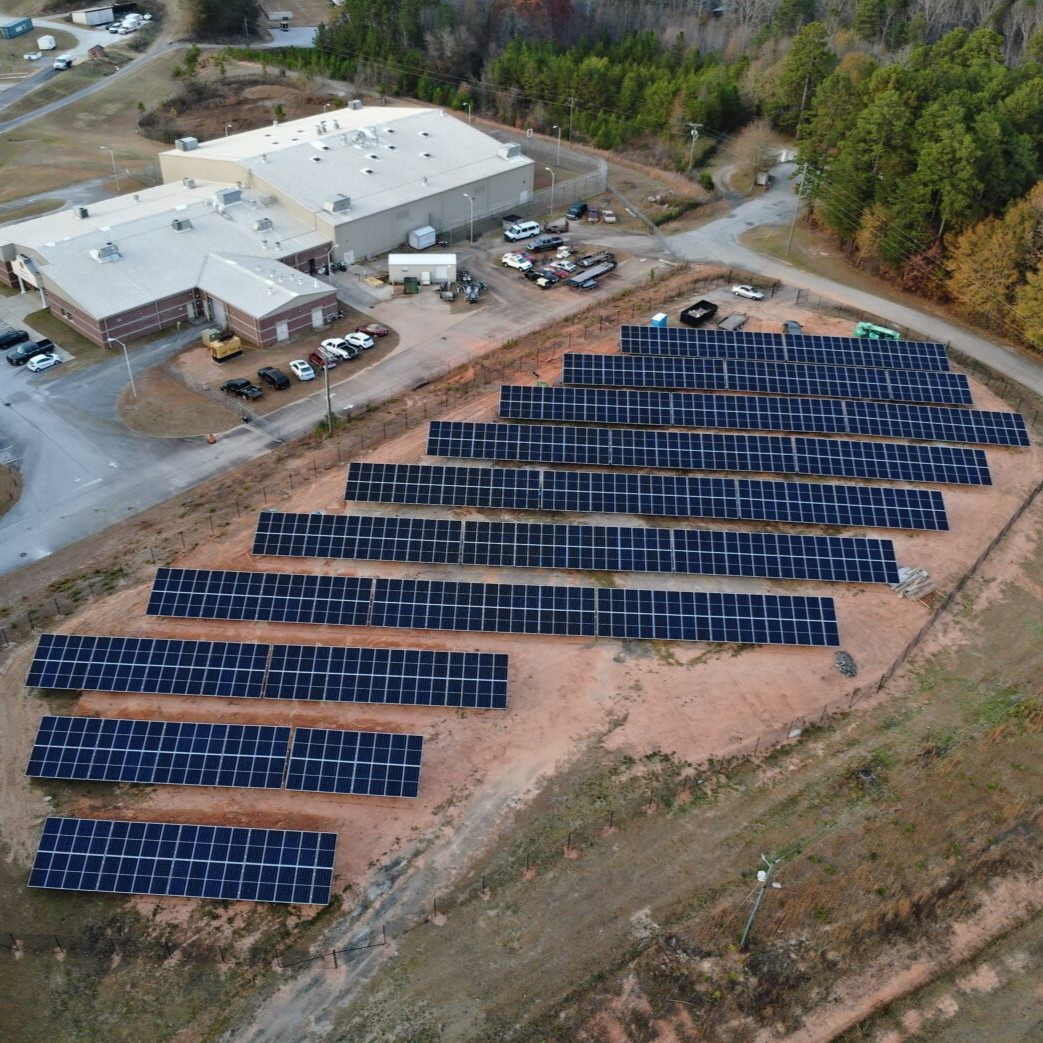
GRP|WEGMAN is proud to announce the successful completion and activation of a solar energy system at the Stephens County Jail in Georgia, a project designed to deliver significant cost savings to taxpayers for decades to come.

The $1.1 million solar installation, which went live on December 12, 2025, represents a forward-thinking partnership among the Stephens County Board of Commissioners, the Stephens County Sheriff's Office, and GRP|WEGMAN. The solar system is projected to offset 106% of annual electrical expenses over the systems' 30-year useful and efficient life, freeing up county resources for other essential services.

"The installation of these panels will directly tie into and offset the jail expenses for electricity," said County Administrator Christian Hamilton. "We anticipate an immediate reduction in the cost of electricity at the jail, offsetting the cost to the Stephens County taxpayers for their overall support of county operations."

"This solar panel project just makes sense for our community. It cuts our energy costs for the jail, boosts efficiency, and ultimately saves money for the taxpayers," said Sheriff Rusty Fulbright.

Learn more about the project:

Stephens County Jail to begin operating on solar power | Now Habersham

Stephens County Jail to operate on Solar Energy | WNEG

  • For example, an outdated library can be transformed into a collaborative learning commons with flexible seating, technology-rich workstations, and interactive displays.
  • A vacant classroom can become a makerspace where students can explore hands-on learning and develop critical skills in science, technology, engineering, and math.

But the vision doesn't have to stop at the classroom door. Schools that have sat vacant for three to five years represent some of the most compelling adaptive reuse opportunities in any community. A shuttered school can be reimagined as:

  • Affordable senior housing or elder wellness space – bringing dignity and community connection to an aging population that helped build the neighborhoods these buildings once served. Engage stakeholders early in the process to gather input and build support for the project. Students, faculty, and staff can provide valuable insights into the types of spaces and amenities that will best support their needs.
  • A veteran support center, offering stable, supportive environments for those transitioning back to civilian life. Prioritize flexibility and multi-functionality in the design process. Creating spaces that can adapt to changing needs and serve multiple purposes will maximize the value of the investment. This may include incorporating movable walls, modular furniture, and technology-rich infrastructure.
  • An early childhood, daycare, or parent support center to expand local services for pre-school aged children.
  • A community center or "third place" – a gathering space for neighbors who need programming, connection, and services outside of home and work.

And as cities track demographic shifts and prepare for the next wave of population growth, these buildings stand ready to be restored to their original purpose, welcoming students again when the community needs them most. A vacant school is never just an empty building. It's stored potential, waiting for the right plan and to serve the community and bring it back to life.

When planning an adaptive reuse project, educational institutions should consider these key strategies:

  • Engage stakeholders early in the process to gather input and build support for the project. Students, faculty, and staff can provide valuable insights into the types of spaces and amenities that will best support their needs.
  • Prioritize flexibility and multi-functionality in the design process. Creating spaces that can adapt to changing needs and serve multiple purposes will maximize the value of the investment. This may include incorporating movable walls, modular furniture, and technology-rich infrastructure.
  • Consider the long-term impact of the project, not just for the educational institution, but for the community as a whole. By repurposing these spaces, schools and universities can ensure that they have the necessary facilities to meet the evolving needs of their students and the wider community.

By embracing adaptive reuse and implementing these strategies, educational institutions can transform underutilized spaces into vibrant, engaging learning environments that inspire students and support academic excellence. As schools and universities consider the future of their facilities, adaptive reuse should be a key strategy in their planning process.

GRP|WEGMAN's infrastructure specialists are here to help you redevelop your spaces for your community's current and future needs.

Want more info?

Reach out to us!

Fill out this form and someone from our team will get back with you shortly!

Thank you! Your submission has been received! Somone from the GRP|WEGMAN team will reach out shortly.
Oops! Something went wrong while submitting the form.
All Content Copyright © 2025
GRP|WEGMAN